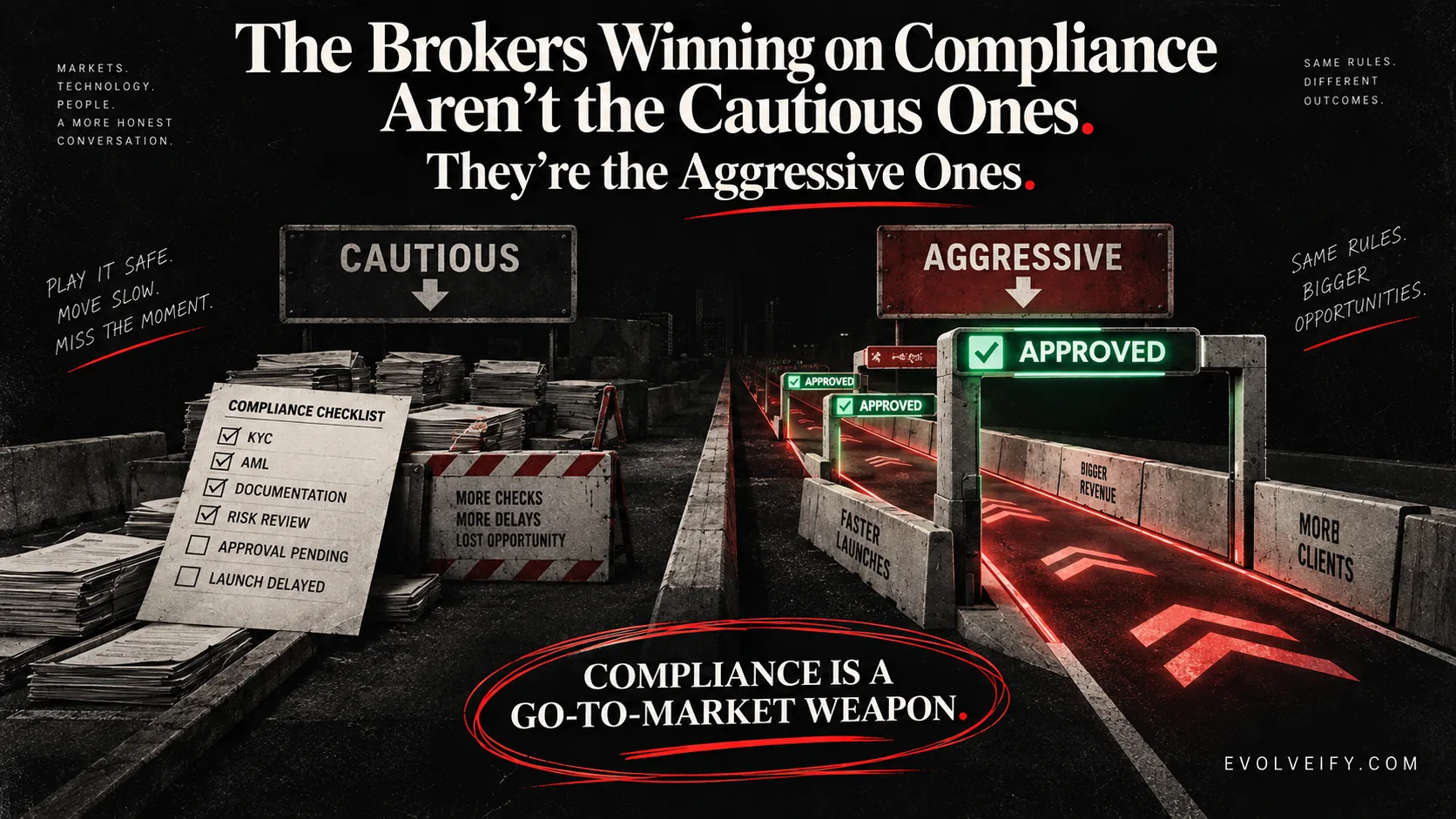
Compliance is not a cost center. It never was.
The brokers treating it like one are the same ones hemorrhaging affiliate budget on traffic that converts at 0.3% because they can’t offer the products, jurisdictions, or commission structures that would actually move the needle.
Here’s the math nobody wants to say out loud.
A CySEC-licensed operator in 2024 can access 27 EU member state markets under passporting. An unlicensed one is cold-calling retail clients in Germany and hoping BaFin doesn’t notice. The compliance cost for CySEC: roughly $200-400k in year one. The revenue ceiling difference: not comparable.
The same pattern plays out in iGaming. MGA-licensed operators get listed on major affiliate networks by default. Curasao operators spend 30% more on affiliate acquisition to reach the same volumes because tier-1 networks won’t touch them, and the affiliates who will are charging a premium for the risk.
Three reasons compliance compounds as an advantage:
Affiliate quality self-selects. The best affiliates, the ones with real SEO authority and long-term audience relationships, protect their own reputations too. They run due diligence on every operator they promote. If you’re not clean, they don’t partner. You end up with the affiliates nobody else wanted, the ones who’ll burn your brand the moment a better rev-share lands in their inbox.
You can compete on stability instead of rate. Regulated operators can offer affiliates longer revenue-share windows, hybrid deals, and guaranteed payment terms because their own revenue isn’t under existential legal threat. An unlicensed competitor offering 45% revshare looks great until they disappear in Q3 with three months of unpaid commissions. Every affiliate in that network remembers. Word travels fast in a small industry.
The regulatory squeeze is one-directional. ESMA tightened leverage limits in 2018. UKGC added affordability checks in 2023. ASIC moved to product intervention in 2021. None of those reversed. Operators who built compliance muscle early absorbed each wave without restructuring. Everyone else scrambled, pulled traffic, suspended programs, and called it a market correction. It wasn’t. It was the bill arriving.
Acquirers pay a multiple for clean cap tables. If you ever plan to sell, merge, or raise institutional money, your compliance record is priced into the offer. Regulated operators with clean audit trails command 4-6x EBITDA in M&A conversations. Operators with unresolved regulatory exposure get offers that assume the liability, which means the number on the term sheet is not the number you walk away with. Several operators in the CFD space learned this in 2022 and 2023 when consolidation accelerated and the acquirers had the leverage.
The counterargument is that compliance slows product velocity. That’s partially true and completely irrelevant. You’re not racing to ship features. You’re racing to build a distribution network that survives the next regulatory cycle. Compliance is the infrastructure that makes the network durable.
Is compliance expensive? Yes. Is the alternative cheaper? Ask the brokers who got delisted from MT4 in 2022.
Observed
What changed
Most operators treat their legal team like a handbrake. The smart ones use them like a weapon.
Method
How this record was read
- Why now · editorial reading
- Filed 22 May 2026 · CFD desk · 3 min read. This is when the desk judged the move worth writing up — the dispatch body carries the reasoning.
- The tactic worth testing · editorial reading
- No tactic is claimed here unless the dispatch states one. Take the situation to the Coach and test it against the archive.
- Pressure-test this dispatch
- Open question · editorial reading
- Does this hold as CFD distribution keeps moving, or is it specific to this cycle?
- Pressure-test this with Evolveify Coach